
25 March 1915 SS 23 (F4) aka ‘Skate’ Tragedy struck the Submarine Service for the first time on this date in 1915. Off the Coast of Oahu, Submarine F-4 (SS 23) exploded and sank outside of Pearl Harbor. Twenty-One of the crew perished, the sole crew member to survive was one who was left ashore to collect any messages for the boat while it was underway. The ‘F’ class boat was one of the first stationed at the new submarine facility at Pearl. It was located in 300 feet of water opposite of Fort Armstrong. Attempts at salvage proved ineffective until specially fabricated pontoons were used and the boat was brought to the surface. During salvage operations a diver was awarded the Medal of Honor for rescuing another diver. An investigation determined that the lead lining of the battery well allowed salt water to leak into the battery. The F-4 remains were taken back out to sea and abandoned.
12 March 1920 USS Seawolf/H 1 aka SS 28 Left New London for San Pedro via the Panama Canal. While making her way up the coast of Mexico she ran aground off Magdalena Bay Mexico 4 of the crew including the CO died attempting to swim to shore. The freighter Mazaltan carried the 22 survivors to San Pedro. At the end of March, the repair ship Vestal pulled H-1 off the rocks but H-1 sank 45 minutes later and it was abandoned. In 2019, her wreck was identified south of Baja California.
3 March 1942 USS Perch SS 176 Perch was shelled by the Japanese Destroyer Ushio two days earlier but Perch was able to submerge. After surfacing to make repairs Ushio located Perch a second time and resumed shelling. Perch submerged and then underwent depth charging. After surfacing for repairs again on March 3rd, Ushio once again fired on Perch and the crew scuttled the boat. All 59 were taken prisoner, 5 later died as POWs, the remainder were released after V-J Day. On November 23, 2006, (Thanksgiving) the wreck of Perch was located in the Java Sea. At some point during the following ten years Perch was illegally salvaged.
5 March 1943 SS 207 Grampus left Brisbane with USS Grayback on February 11th. Grayback reported sighting Grampus on March 4th, the next day two Japanese Destroyers attacked a submarine near Kolombangara Island in Blackett Strait. It was believed that Grampus was lost during that action. The loss of Grampus resulted in 71 killed.
15 March 1943 SS 201 Triton reported she had attacked a convoy and had been depth charged. It was the last message received from Triton. Japanese Naval records examined after the war contained a report of three Destroyers attacking a submarine in Tritons patrol area near Rabal. The report stated an oil slick and debris with American markings was spotted after the attack 74 were killed, all hands lost. Triton was credited with sinking 16 ships. Her ships bell was not onboard on that final patrol and was located in 2011, it is now on display at Naval Station Great Lakes.
26 March 1944 SS 284 Tullibee, on the surface during a rain storm, contacted a convoy and launched two torpedoes. Approximately two minutes later Tullibee was struck with a violent explosion. Gunner’s Mate second Clifford Weldon Kuykendall, on the bridge was knocked unconscious and thrown overboard. On regaining consciousness, the Tullibee was gone. Picked up by the Japanese Destroyer Wakatake, Kuykendall was made a prisoner of war and was released after V-J Day. It was concluded that Tullibee was the victim of its own torpedo which malfunctioned and ran in a circular course. All other hands, a total of 79, were killed.
20 March 1945 SS 369 Kete 87 killed all hands lost. It is speculated that Kete was torpedoed by a Japanese submarine although there is no evidence to this effect. It seems more likely she encountered a mine field off Okinawa. In 1995 a group operating a “SCOPIO” ROV are believed to have found a 20 or so foot diameter object of 115 feet in length in the approximate location Kete might be found. Unfortunately, they were unable to return to that location.
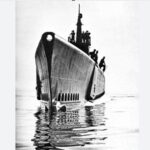
28 March 1945 SS 237 Trigger 89 killed all hands lost – Trigger attacked and sank the Japanese repair ship Odate on 27 March. The next day a joint air and sea group conducted a two-hour long attack heard by submarines Silversides, Sea Dog, Hackleback and Threadfin. Threadfin was the only one among them attacked that day; after the attack on Threadfin ceased she reported several heavy explosions east of her. Japanese records recovered after the war reported a Japanese aircraft attacked a submarine that day and guided two ships which initialed the two-hour attack which yielded a large oil slick.
Pictured USS Trigger SS 237